
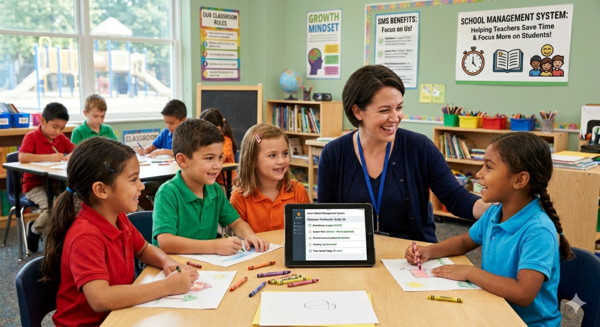
How a School Management System Helps Teachers Save Time and Focus More on Students
Introduction
In today’s fast-paced educational environment, teachers are expected to handle multiple responsibilities beyond classroom teaching. From attendance tracking and lesson planning to report card preparation and parent communication, administrative tasks often consume a significant portion of their time. This is where a School Management System (SMS) or School ERP (Enterprise Resource Planning) system becomes a valuable solution.
A modern School ERP streamlines daily operations, reduces paperwork, and enables teachers to focus more on what matters most—teaching and supporting students.
What is a School Management System?
A School Management System or School ERP is a digital platform that automates and manages various academic and administrative activities within a school. It integrates different functions such as attendance, examinations, student records, communication, fee management, and timetable scheduling into a single system.
By centralizing information and processes, the system makes school management more efficient and transparent.
How a School ERP Helps Teachers Manage Their Time
1. Automated Attendance Management
Taking attendance manually can be time-consuming, especially in large classrooms. A School ERP allows teachers to mark attendance digitally within seconds. Attendance records are automatically stored and can be accessed anytime.
Benefits:
- Saves classroom time
- Reduces manual errors
- Generates attendance reports instantly
2. Simplified Lesson Planning
Teachers can create, organize, and share lesson plans through the system. Digital lesson planning helps educators stay organized and ensures that the syllabus is completed on time.
Benefits:
- Easy access to teaching materials
- Better curriculum tracking
- Improved planning and productivity
3. Faster Assessment and Report Generation
Preparing report cards and performance evaluations manually requires considerable effort. School ERP systems automate grading and report generation, making the process quick and accurate.
Benefits:
- Reduces administrative workload
- Provides instant academic insights
- Helps identify student strengths and weaknesses
4. Easy Communication with Parents
Communication between teachers and parents is essential for student success. School ERP platforms provide messaging and notification features that allow teachers to share updates, assignments, attendance records, and performance reports instantly.
Benefits:
- Stronger parent-teacher collaboration
- Faster sharing of information
- Better student support
5. Centralized Student Information
Teachers can access student profiles, academic records, attendance history, and behavioral reports from a single dashboard.
Benefits:
- Saves time searching for records
- Enables informed decision-making
- Supports personalized learning approaches
How School ERP Helps Teachers Focus More on Students
More Time for Teaching
By automating repetitive administrative tasks, teachers can dedicate more time to lesson delivery, classroom interaction, and creative teaching methods.
Better Understanding of Student Performance
Real-time analytics and performance tracking help teachers identify learning gaps early. This allows them to provide targeted support and improve student outcomes.
Personalized Learning Experience
With easy access to student data, teachers can adapt their teaching strategies according to individual learning needs, helping every student achieve their full potential.
Enhanced Classroom Engagement
When teachers spend less time on paperwork, they can focus more on classroom discussions, activities, and student participation, creating a more engaging learning environment.
Benefits for the Entire School
A School Management System not only benefits teachers but also improves overall school efficiency.
- Streamlined administrative processes
- Improved data accuracy
- Better communication among stakeholders
- Increased transparency
- Enhanced academic performance monitoring
Conclusion
A School Management System or School ERP is transforming the way schools operate. By automating routine administrative tasks, it helps teachers manage their time more effectively and devote greater attention to classroom teaching and student development. As a result, educators can create a more engaging, productive, and student-centered learning environment.
In an era where technology is reshaping education, investing in a School ERP is not just a convenience—it is a strategic step toward improving teaching quality and enhancing student success.